

In recent years, an unexpected trend has emerged on the global political stage: nationalist and populist leaders are increasingly voicing pro-Bitcoin rhetoric. From Donald Trump in the US to Marine Le Pen in France and Nigel Farage in the UK, all have praised the virtues of Bitcoin or cryptocurrencies, framing them as tools of national or individual sovereignty. Once seen as a technological oddity or a threat to fiat currencies, Bitcoin is now becoming a symbol of financial independence for movements that challenge global elites. This ideological convergence may seem surprising, but it makes sense: Bitcoin, as a decentralised currency, resonates with the deep distrust these movements feel toward central institutions like central banks or the European Union. By offering a way to bypass financial elites and return control of money to the people or the state, Bitcoin has become an ideal anti-establishment banner for these political figures.
At the heart of this alliance is the belief that economic sovereignty begins with control over currency. Traditionally, sovereignists advocate for national control of monetary policy—even to the point of exiting the euro, as Marine Le Pen once proposed. Bitcoin offers a radical alternative: neither national nor centrally managed, but transnational and governed by its community. For leaders who reject the established global order, it represents a way to bypass global financial structures accused of eroding sovereignty—such as the EU, the IMF or the US Federal Reserve. This has led to an unusual marriage between sovereignist populism and crypto-libertarian ideals: what unites Trump, Le Pen, Farage and others is their promotion of Bitcoin as a tool of freedom against financial elites.
Also worth reading: Best crypto platforms in 2025: the comparison
Donald Trump: from sceptic to crypto champion

Donald Trump's evolution is telling. Once a vocal critic—tweeting in 2019 that he was "not a fan of Bitcoin"—the former US president has made a dramatic U-turn. During his 2024 campaign and since returning to office in 2025, Trump has positioned himself as a staunch advocate for the crypto industry and for Bitcoin as a strategic asset. One striking example is his presidential order to establish a US strategic Bitcoin reserve. Rather than selling the 198,109 BTC already held by the US government (mostly from legal seizures), his administration decided to keep them—worth roughly $17 billion—and is even considering accumulating more without increasing the federal deficit. The goal: to create a "digital Fort Knox" that showcases American financial strength in uncertain times.
This move is part of a broader Trump strategy to make the US the "crypto capital" of the world. "Our country must lead in this field," he declared, championing the innovation and economic growth that digital assets can bring. Staying true to his campaign promises, he appointed a “crypto czar” to the White House and took several initiatives in support of the sector—from organising the first presidential summit on crypto to pushing for a more permissive legal framework for digital currencies. Trump has also openly supported Bitcoin mining on US soil, stating he wants all remaining bitcoins to be mined in America—a way of linking energy production, monetary sovereignty and economic patriotism.
Moreover, the Trump family has become directly involved in the crypto ecosystem. A project called World Liberty Financial (WLFI), backed by Donald Trump and his inner circle, has become a phenomenon in the US. It raised over $550 million during its presale—success driven as much by its political connections as by the enthusiasm of Trump supporters. Trump himself disclosed $57 million in earnings related to the project in his financial transparency filings. While this so-called "Trump token" highlights the commercial appeal of his name, it also raises concerns among observers about its structure and purpose. Still, Trump's pro-crypto pivot—combining official decrees and lucrative private ventures—shows how Bitcoin has become, for a portion of the US conservative camp, a financial sovereignty tool and a new front in the fight against Washington's establishment.
Also worth reading: 5 simple and profitable methods for investing in crypto
Marine Le Pen: from banning Bitcoin to national mining strategy
In France, Marine Le Pen's relationship with Bitcoin has also changed dramatically. Back in 2016, the leader of the National Front (now National Rally) saw cryptocurrencies as a threat to monetary sovereignty. She outright called for banning Bitcoin in France in the name of economic patriotism: “A currency is a national public good entrusted to the sovereign people. Therefore, (the FN) will prevent the use of cryptocurrencies such as Bitcoin in France,” she declared. At the time, Le Pen viewed virtual currencies as a tool of global finance, used to abolish cash and control citizens—in short, a means of oppression rather than liberation.
However, her stance softened over time. By 2019, she acknowledged that cryptos could be “a way to escape the grip of banks and international financial institutions”, while still calling for strict regulation to prevent abuses. More recently, in 2025, Le Pen surprised many by embracing Bitcoin in a positive light. During a visit to the Flamanville nuclear power plant, she proposed using nuclear energy surpluses to mine cryptocurrencies—notably Bitcoin—to build up “strategic reserves” for EDF, the state-owned energy giant. Instead of curbing production at reactors (which often run at just 70% capacity), she argued it would be wiser to use the excess energy for useful purposes such as hydrogen production or Bitcoin mining. The profits could then fund the maintenance and modernisation of France’s nuclear infrastructure—an economically savvy way, according to Le Pen, to turn a problem into an opportunity.
The proposal made waves. Not only did it mark Bitcoin’s entry into mainstream French political discourse at the highest level, but it also symbolised Le Pen’s ideological transformation on the topic. Going from calls to ban Bitcoin to integrating it into a national industrial strategy is a full 180-degree shift. Trump’s example may have played a role: just days earlier, he had launched a US strategic Bitcoin reserve, giving new legitimacy to crypto-sovereignty. And the idea of Bitcoin as a store of value is gaining broader appeal: even former Socialist president François Hollande recently met with French crypto stakeholders to discuss Bitcoin mining and reserve opportunities in France. This shows that the subject transcends traditional party lines.
Le Pen now appears to be “riding the crypto wave” while tailoring it to her sovereignist agenda. By promoting a “nationalised” Bitcoin (mined with French energy for the benefit of a French public entity), she attempts to blend the decentralised philosophy of crypto with her vision of national sovereignty. The underlying message to patriotic voters is clear: rather than letting cryptocurrencies weaken the state, let’s use them to strengthen it—within a framework controlled by public power. The big question is whether this vision will resonate beyond National Rally’s voter base—and how it would fit with the European framework, which, through the ECB and MiCA regulation, seeks tight oversight of crypto-assets.
Also worth reading: How to give crypto as a gift: ideas and real-world examples
Nigel Farage: from financial Brexit to crypto haven

Across the Channel, Nigel Farage represents another angle of this fusion between sovereignist politics and crypto enthusiasm. The architect of Brexit and champion of UK independence from Brussels has embraced Bitcoin as a new rallying point for British sovereignty. As the UK charts its course post-EU, Farage envisions nothing less than turning the country into a “crypto powerhouse”—a global hub for cryptocurrencies. At a Bitcoin conference in Las Vegas in 2025, he announced that his party, Reform UK, would now accept political donations in Bitcoin—a first in the UK. He pledged that, if elected, he would push for a bold Crypto Assets and Digital Finance Bill including several pro-crypto measures: lowering capital gains tax on crypto from 24% to 10% to attract investors, banning banks from discriminating against crypto users, and even establishing a Bitcoin reserve at the Bank of England.
This ambitious agenda aims to place the UK at the forefront of the ongoing financial revolution. For Farage, it's a natural extension of Brexit: freed from EU rules, the City of London could catch up with hubs like Miami or Singapore by adopting a crypto-friendly regulatory framework. “Let’s help our country truly enter the 21st century: crypto and digital assets are here to stay,” he declared, calling on Britain’s youth to support his vision. His message echoes his libertarian and anti-establishment worldview: Farage, who built his career denouncing Brussels bureaucrats and promoting “freedom,” sees Bitcoin as a natural continuation of those battles. Bitcoin’s DNA—decentralisation, distrust of traditional finance, individual empowerment—mirrors his campaign against a sclerotic financial establishment. He even praised the US for being “ahead of the game” in its approach to digital assets—a nod to Trump’s recent moves.
Inevitably, some critics argue that Farage is simply trying to appeal to tech-savvy voters disillusioned with traditional far-right politics. By adopting Bitcoin iconography, the former UKIP leader is attempting a political rebranding. Still, his pro-crypto stance fits within his sovereignist vision: restoring Britain’s financial autonomy by breaking free from international regulatory constraints. Ironically, while the European Union tightens its grip on crypto via MiCA, the champion of Brexit proposes the opposite: freedom to innovate, even if it means disrupting monetary norms. Whether these proposals survive the ballot box—and whether the Bank of England will one day diversify its official reserves with Bitcoin—remains to be seen. Not long ago, such a move would have sounded like financial science fiction.
Also worth reading: Bitcoin at $100,000: buy, sell or wait?
From El Salvador to Argentina: a global crypto-populist wave
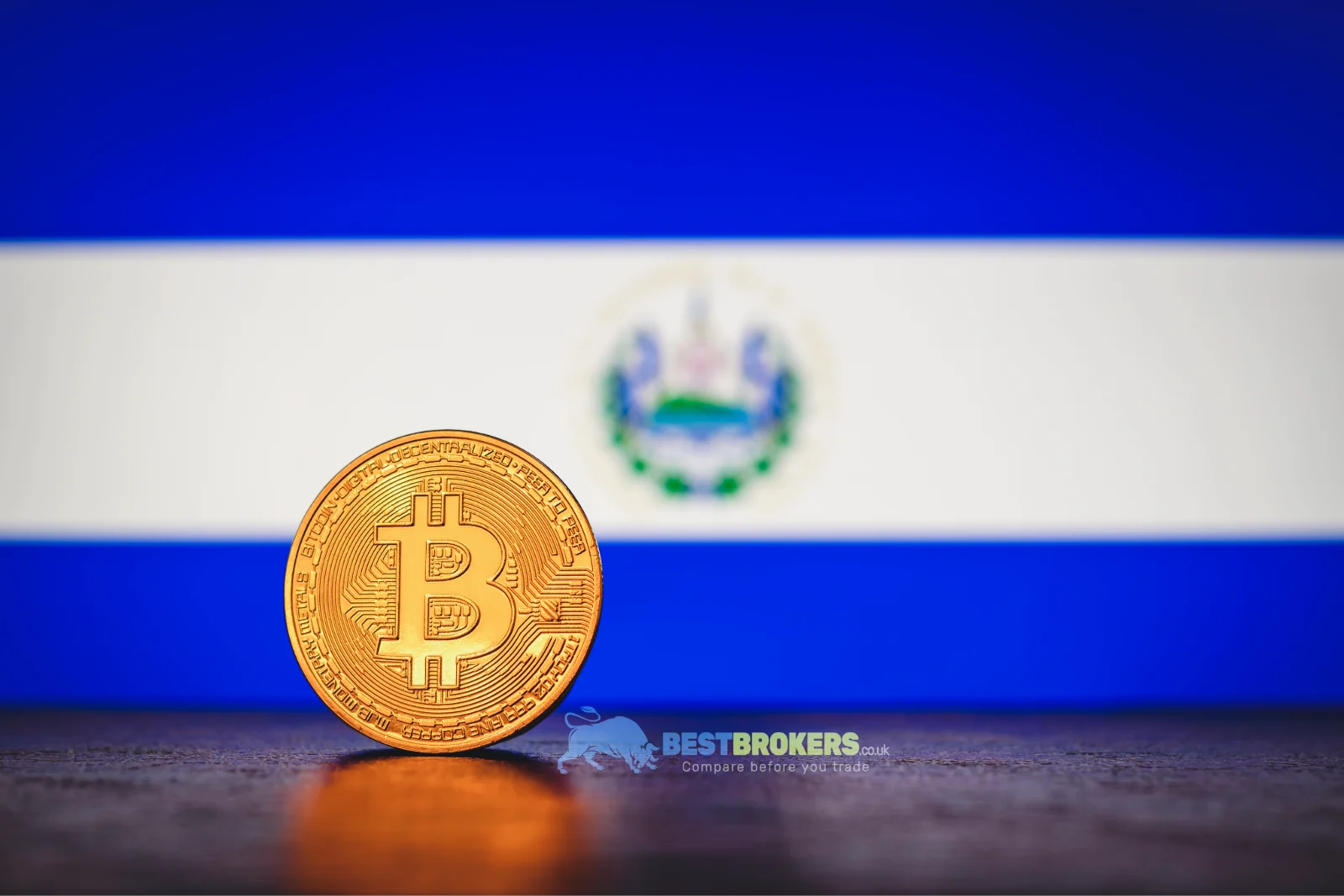
The link between crypto and sovereignty isn’t limited to the West. Around the world, anti-establishment leaders have embraced Bitcoin as a symbol of their quest for independence. The most striking example is El Salvador. In 2021, President Nayib Bukele—a populist who styles himself as a challenger to traditional institutions—made Bitcoin legal tender. The historic move aimed to break free from dependence on the US dollar (El Salvador’s official currency) and from international financial organisations. Bukele pitched Bitcoin as a tool for attracting investment, enabling remittances from the Salvadoran diaspora, and restoring monetary sovereignty to a small, externally dependent country. Though still controversial—due to limited adoption, price volatility and IMF criticism—the move earned Bukele a reputation among crypto enthusiasts as a “visionary leader of the future.” His decision has inspired others, from the Central African Republic (which briefly made Bitcoin legal tender in 2022 to escape the CFA franc) to unlikely cross-border partnerships, such as a recent crypto deal between El Salvador and Pakistan.
Elsewhere in Latin America, Argentina reflects both the promise and the pitfalls of this crypto-populist alliance. New president Javier Milei, a staunch libertarian and outsider, has long praised Bitcoin. During his campaign, he lashed out at Argentina’s central bank—calling it a “massive scam”—and promoted crypto as a way for citizens to protect themselves from rampant inflation. His slogan, “Viva la libertad”, was even tied to a digital token project—signalling his desire to fuse his anti-system message with the crypto world. However, Milei’s experience also serves as a cautionary tale. In early 2025, the president promoted a shady token called $Libra, presenting it as a growth driver for the local economy. The token saw a brief speculative boom followed by a dramatic collapse within hours, leaving thousands of investors with heavy losses—an all-too-familiar “rug pull” scenario. The scandal was so severe that opposition lawmakers called for Milei’s impeachment, accusing him of using his position to mislead the public. The affair sparked political and legal turmoil, and even other regional leaders slammed Milei—former president Cristina Kirchner accused him of going from “self-proclaimed global leader” to “crypto conman.”
Still, the broader trend persists: from Latin America to Asia, from Africa to Eastern Europe, many disruptive movements—whether nationalist right or radical left—are exploring crypto as a way to bypass traditional financial systems. In Russia and Iran, crypto-based payment schemes aim to evade international sanctions. In Turkey, widespread Bitcoin adoption reflects a collapse of trust in the local currency and, indirectly, in the ruling order. Everywhere, Bitcoin is entering the debate on monetary sovereignty—for better or worse.
Political Bitcoin: bold opportunity or dangerous gamble?
The rise of Bitcoin as a sovereignty tool raises serious questions. On one hand, it represents a clear break with the established financial order. Long marginalised, cryptocurrencies are now part of national strategies. For sovereignists, Bitcoin symbolises power: a control-free asset that promises to restore influence—whether to the people (libertarian vision) or to the nation-state (nationalist vision).
But this is a high-stakes gamble. Bitcoin is volatile, speculative, and—when officially adopted, as in El Salvador—can lead to substantial losses. It may also become an electoral tool or a populist façade, as shown by some of the more questionable projects tied to Trump or Milei.
For financial institutions, the trend raises a dilemma: can Bitcoin truly become a store of value? Or will it undermine traditional monetary sovereignty by eluding regulation entirely? Without a robust framework, the risks—economic, fiscal and political—are very real.
Ultimately, the link between Bitcoin and sovereignty goes beyond technology. It signals the entry of cryptocurrencies into the global political arena. And when leaders wave ledgers instead of flags, it’s the future of financial control that hangs in the balance.


