

We don’t all live at the same pace, so why assume we should all trade in the same way?
Some investors prefer to analyse extensively before acting, while others thrive on speed and rapid decision-making. Yet when it comes to trading, there is often a perception that there is only one “right” way to do it.
In reality, each trader is looking for something different: action for some, stability for others. Trading is no exception. Swing trading, day trading and scalping suit distinct profiles, and each approach comes with its own advantages.
This article offers a clear comparison of the three trading styles, along with practical guidance to help you build a robust strategy.
💡 Reminder
There is no universal strategy. The choice between swing trading, day trading and scalping depends on your available time, your temperament, your risk tolerance and your personal objectives.
Also read: Discover our selection of the most recommended CFD brokers
What is swing trading?
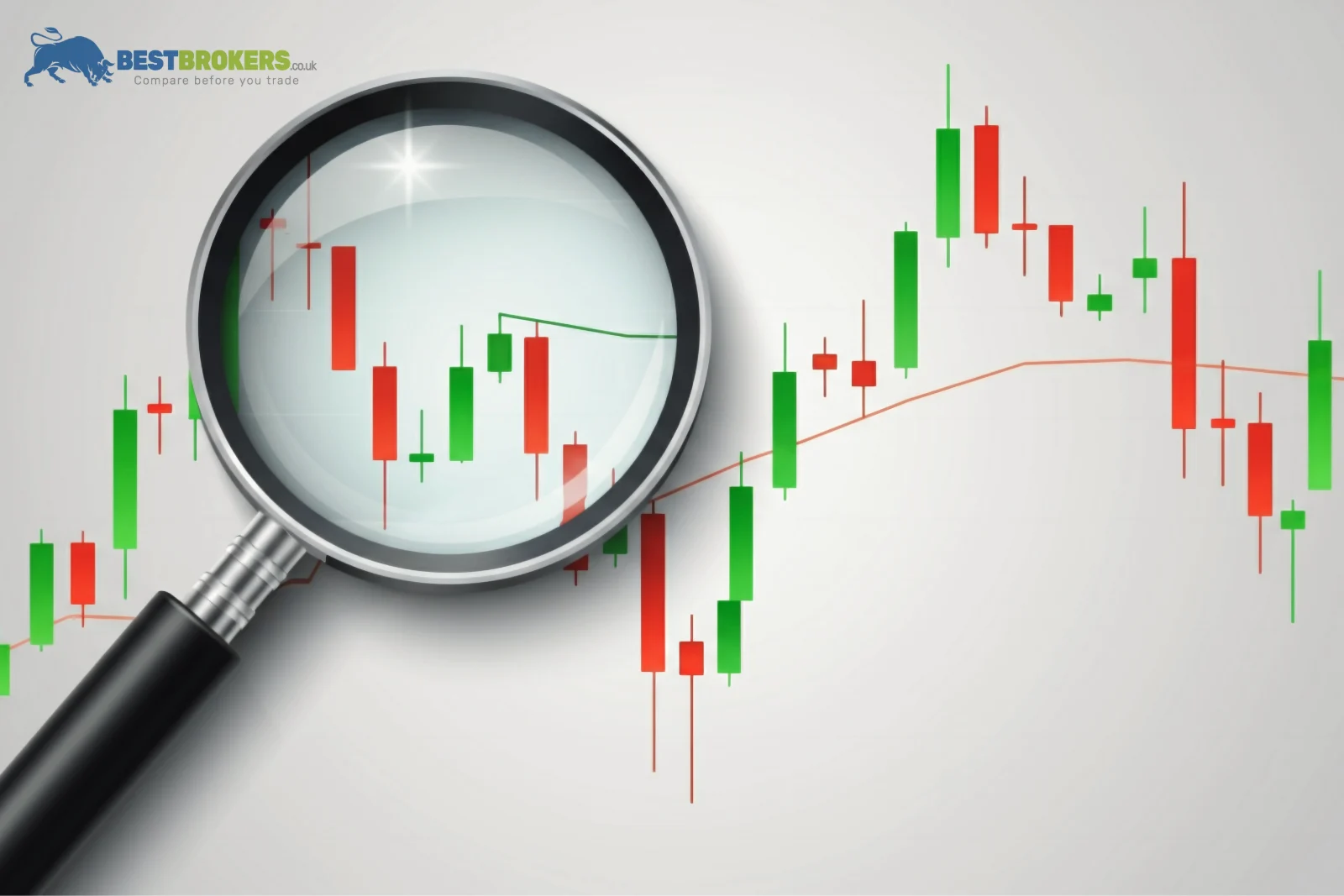
Swing trading involves keeping positions open for several days, sometimes even a few weeks. The approach is based on a simple idea: allow the market to develop a natural move without being glued to your screens.
The swing trader works with 1-hour, 4-hour or daily timeframes, identifies key areas (support, resistance, technical levels), and then allows the plan to unfold. The objective is not to capture every micro-movement, but to benefit from a meaningful portion of a broader trend.
Because they aim to capture larger price movements, swing traders generally accept a wider stop-loss, offset by a higher profit target. Where a day trader may focus on short-term fluctuations, often between 0.3% and 1% on an index or currency pair, a swing trader typically targets a move of 2% to 5%, sometimes more on equities or more volatile assets. This approach requires leaving the position open for several days to capture the full move. With only a handful of trades per week, swing trading reduces transaction costs and eases psychological pressure.
Strengths of swing trading
- ✅ Low mental load: a daily analysis is often sufficient.
- ✅ Reduced stress: you execute a plan rather than reacting second by second.
- ✅ Better balance between time commitment and profit potential.
- ✅ Lower trading costs thanks to fewer positions.
- ✅ Suitable for most retail traders, from beginners to experienced traders.
Limitations of swing trading
- ⚠️ Overnight risk: unexpected announcements, price gaps.
- ⚠️ Less action: only a few trades per week.
- ⚠️ Wider stops, making disciplined risk management essential.
- ⚠️ Capital tied up for several days.
Also read: 10 essential books to improve your investing skills
Day trading: more action, greater involvement
Day trading (also known as intraday trading) consists of opening and closing all positions within the same trading day. This style aims to capitalise on movements specific to a single session: economic releases, opening volatility or rapid reactions to technical levels.
Day trading focuses exclusively on the current session: no position is held overnight, which limits exposure to unexpected news. Stop-loss and take-profit levels are tight, as the objective is to cut losses quickly and secure modest but consistent gains. The pace is faster than swing trading: several positions may be taken within the same day, though not at the extremely high frequency seen in scalping.
This trading style appeals to those seeking more action, but it requires time, responsiveness and strong emotional discipline. Day trading suits traders who can dedicate several hours a day to monitoring the markets and who enjoy the intensity of active trading.
Advantages of day trading
- ✅ No overnight risk: all positions are closed by the end of the day.
- ✅ Frequent opportunities, as each session brings new movements.
- ✅ More precise risk per trade, thanks to tight stops.
- ✅ Potential for consistent daily results.
Limitations of day trading
- ⚠️ Requires several hours monitoring the markets.
- ⚠️ Demands strong responsiveness and composure.
- ⚠️ Higher cumulative costs than swing trading.
- ⚠️ More challenging for complete beginners.
💡 Did you know?
Day trading is rarely compatible with a standard 9am to 5pm schedule. It is a discipline that requires time, a precise plan and strict risk management rules.
Scalping: ultra-fast trading
Scalping involves placing a very large number of trades during the day, each lasting from a few seconds to a few minutes. It is the fastest, most technical and most psychologically demanding approach. The scalper aims to accumulate small, rapid gains by exploiting micro-fluctuations in the market.
Because each position remains open for a very short time, the risk per trade is minimal: gains and losses are measured in just a few points, rarely more. Scalping is the style with the shortest market exposure, significantly limiting the maximum loss on a single order. However, to achieve meaningful results, the scalper must multiply positions and accumulate numerous small profits. It is this repetition of micro-gains that builds the daily P&L (profit and loss).
Since scalping requires constant attention and near-instant execution, many traders rely on automated tools to improve efficiency. This may include trading algorithms, robots capable of detecting repetitive setups, or ultra-fast execution tools. In this case, the scalper’s work is largely done in advance, by configuring an automated strategy designed to identify patterns and execute orders.
Advantages of scalping
- ✅ Very low risk per trade, with tight stops.
- ✅ Numerous opportunities, even in low-volatility markets.
- ✅ Immediate results, ideal for sharpening trading reflexes.
- ✅ Well suited to automated systems (robots, algorithms).
Limitations of scalping
- ⚠️ High stress levels, requiring constant concentration.
- ⚠️ Mentally exhausting.
- ⚠️ Significant costs due to the high number of trades.
- ⚠️ Not recommended for beginners.
- ⚠️ Fast hardware is required (low latency, real-time data feeds, a robust platform).
💡 Our advice
Consider scalping only if you already have solid market experience and genuine stress resilience. It is the most technical and probably the most demanding of the three styles.
Comparison table: swing vs day trading vs scalping
To summarise, here is a concise comparison of swing trading, day trading and scalping:
| Criteria | Swing trading | Day trading | Scalping |
| Position duration | Days / weeks | Minutes / hours | Seconds / minutes |
| Time required | Low | Medium / high | Very high |
| Stress level | Low | Medium | High |
| Number of trades | Low | Medium | Very high |
| Costs | Low | Moderate | High |
| Recommended level | All levels | Intermediate | Advanced |
| Type of opportunities | Trends | Intraday volatility | Micro-movements |
Our advice for identifying your trading style
Choosing a trading style primarily depends on your lifestyle and the way you approach the markets. A few simple guidelines can help you gain clarity.
#1 - ⏱️ Your available time
👉 When to choose swing trading:
If you only have an hour in the evening or at weekends, swing trading is naturally the most suitable option.
👉 When to choose day trading:
If you can monitor the markets for several hours a day, day trading becomes a realistic option.
👉 When to avoid scalping:
Scalping requires near-constant availability and high responsiveness.
#2 - 🎯 Your temperament
👉 Swing trading:
Patient and methodical traders often feel most comfortable with swing trading.
👉 Day trading:
Those who enjoy action and rapid feedback tend to gravitate towards intraday trading.
👉 Scalping:
Scalping suits only experienced profiles capable of handling intense pressure without losing clarity.
#3 - 📌 Your objectives
👉 Short-term objective:
Day trading can deliver regular short-term results.
👉 Long-term growth objective:
Swing trading favours a steadier pace, with a focus on gradual capital growth.
👉 The real criterion:
The key is to choose an approach aligned with your expectations, not the one that appears to “move faster”.
#4 - 🔍 Test before committing
Before making a decision, test the different styles using a demo account. This allows you to experience the pace, stress level and specific demands of each approach without taking financial risk.
#5 - 📈 Your progression
👉 The most common path:
Many traders start with swing trading to learn in a calmer environment, then later evolve towards faster styles.
👉 Hybrid approaches:
Others prefer to combine multiple time horizons (long term + intraday).
👉 The key principle:
Define a clear framework and stick to it consistently.
Conclusion: how to find the trading style that suits you
Swing trading, day trading and scalping each correspond to different profiles. Swing trading stands out for its balance and lower stress, day trading for its faster rhythm, and scalping for its extreme precision, although it remains reserved for seasoned traders.
Ultimately, the best style is not the one that promises the highest returns, but the one you can practise consistently and calmly.
Choose based on your available time, your stress tolerance and your objectives. Test, adjust, then commit to the approach that allows you to remain disciplined day after day. Trading rewards consistency, not haste.


