

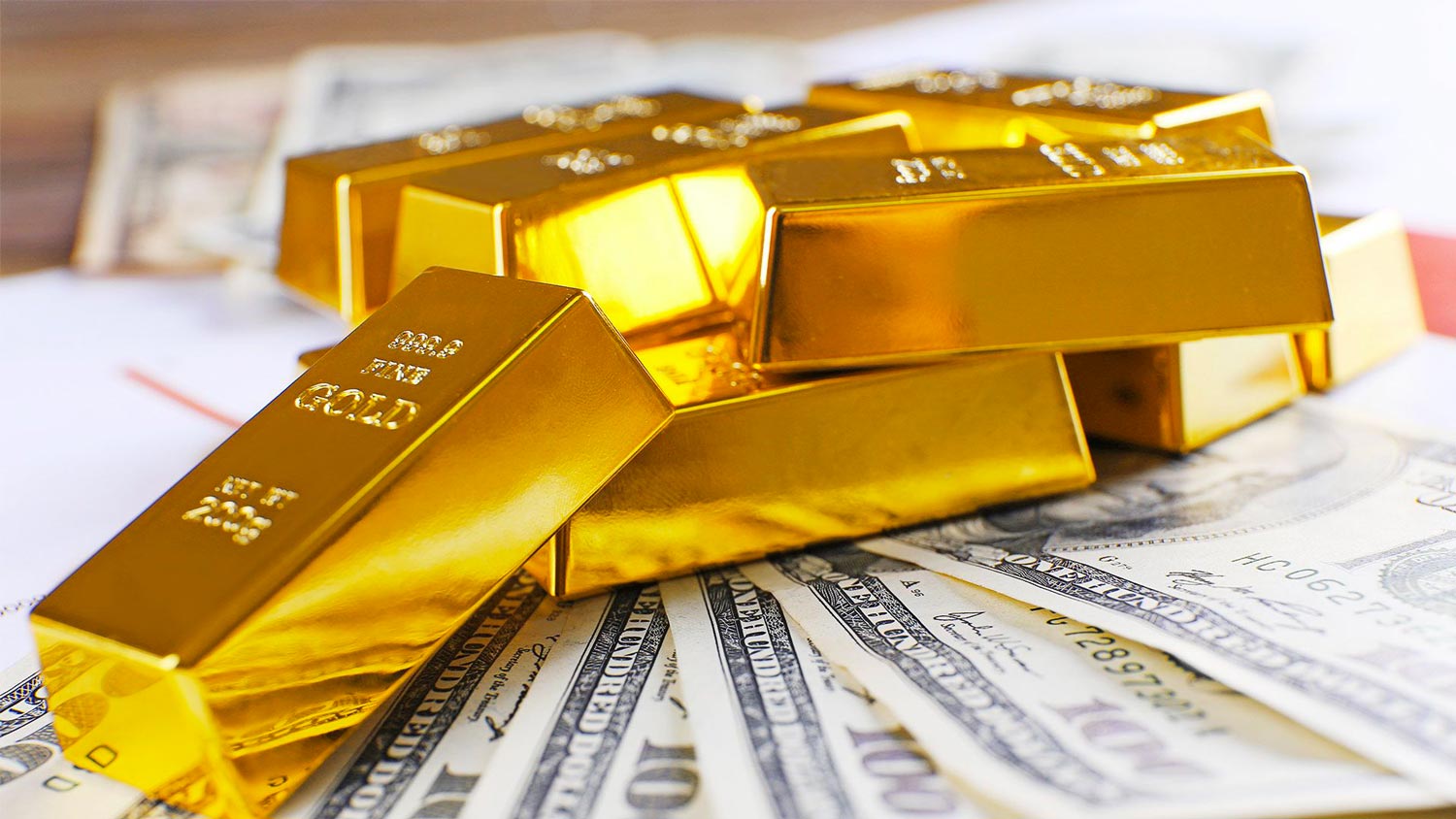
Gold has just reached a new all-time high, soaring above $4,000 an ounce. An impressive milestone at a time when stock markets already seem inflated by the AI boom and tech-driven euphoria.
Beneath the surface, however, unease is spreading: a weakened dollar, record public debt, and clear signs of an economic slowdown. Everything points towards a perfect storm for safe-haven assets — and, as always, gold shines the brightest.
Also read: The comparison of the best CFD brokers
Gold, a timeless safe haven
« Gold is the currency of fear... and of patience. »
For five millennia, gold has survived wars, crises and revolutions without ever losing its aura. It is neither a promise nor a debt — it is a symbol of pure trust.
Unlike currencies that can be printed endlessly, gold is naturally scarce. It is estimated that only around 216,000 tonnes have ever been mined in history.
This rarity explains why, in times of doubt or inflation, investors instinctively return to it.
As a physical and tangible asset, gold exists outside the banking system and depends on no issuer. Unlike fiat currency, it cannot be printed or devalued at will by a central bank.
« Gold cannot be conjured out of thin air, unlike money. »
This is why, historically, during periods of heavy money creation (rate cuts, quantitative easing, etc.), gold has been seen as a hedge against inflation and currency depreciation. The yellow metal also carries no counterparty risk, offering protection in the event of a financial shock: its value does not depend on a debtor’s solvency or the stability of an institution, unlike a bond or a bank deposit.
Why is gold soaring in 2025?
#1 - The return of fear on the markets
The extreme valuations in the artificial intelligence sector remind many of the dot-com bubble of the early 2000s. Indices keep rising — but so does investors’ caution.
Many are now looking for a solid shelter before a potential correction. Gold benefits directly from this caution, acting as a psychological insurance policy against volatility.
#2 - Accelerating de-dollarisation
The dominance of the US dollar is being increasingly challenged. Central banks in China, India and Russia are buying massive amounts of gold to reduce their reliance on the greenback.
The result is a record-breaking level of institutional demand — over 1,000 tonnes per year since 2022.
Each tonne removed from the market strengthens the perception of gold as a global standard of trust, at a time when confidence in major currencies is eroding.
#3 - Soaring debts, fading interest rates
In the United States, public debt is nearing $37 trillion. To prevent a crisis, the Federal Reserve is hinting at a pause in rate hikes — and possibly even cuts ahead.
When real interest rates fall, gold naturally becomes more attractive: it may not yield anything, but it doesn’t lose value either. In an era of cheap money, the yellow metal once again stands out as a credible alternative to cash.
#4 - Geopolitical uncertainty
From trade tensions and regional conflicts to political instability, the world remains on edge. Each crisis renews the appeal of tangible assets.
As Ray Dalio once said: “If you don’t own gold, you don’t know history.”
The real question now is how to benefit from this trend without taking on unnecessary risk.
💡 Key takeaway
Gold has seen historic peaks followed by sharp corrections before. In January 1980, during a major inflationary spike, the price of gold reached $850 per ounce (around $3,493 in today’s money) before dropping 65% within a year. Similarly, after the 2011 peak that followed the 2008–2009 financial crisis, gold lost more than a third of its value in just two years. These episodes remind us that, even as a “stable” asset, gold is not immune to strong swings — and that a rally can easily be followed by a long correction.
How to invest in gold
Gold is not just about bars locked in a vault. There are several ways to invest in it, depending on your goals and risk tolerance.
| Type of investment | Main advantages | Points to watch |
| Physical gold (coins, bars) |
|
|
| Gold-backed ETFs |
|
|
| Mining stocks |
|
|
Physical gold remains the “instinctive” choice for cautious savers. It offers reassurance — though it comes with storage costs.
Gold ETFs offer a modern, liquid solution that provides simple exposure to the metal’s performance. Mining stocks, meanwhile, attract those betting on sector growth rather than the metal itself.
Also read: The comparison of the best ETF brokers
💡 Useful reminder
Investing in gold is a “neutral” investment: it generates no income, but it doesn’t betray you either. It’s the value of patience — not performance.
What role should gold play in your portfolio?
Gold should not form the core of a strategy, but rather act as a safety net. Most analysts recommend allocating between 5% and 10% of your portfolio to gold, depending on your risk tolerance.
A small portion of gold serves as a stabiliser: when markets panic, it cushions the fall. But being overexposed can be costly — gold generates no income and its price can stagnate for years.
« Gold won’t make you rich, but it can stop you from becoming poor. »
Conclusion
The surge in gold prices in 2025 is no coincidence — it reflects a world searching for stability.
Tech bubbles, economic uncertainty, unsustainable debt… Every time confidence fades, the yellow metal resumes its ancestral role: to preserve value.
But it’s crucial not to confuse safety with speculation. Gold is not a rocket for quick profit — it’s a silent insurance policy. It’s not bought to get rich, but to stay steady when everything else shakes.
And in that respect, after five thousand years of history, gold has never failed.
Could history repeat itself? With every major technological shift, investors rediscover the appeal of tangible assets.


